Introduction
Digital transformation is no longer optional for businesses in Tanzania. Whether you run a retail shop, a logistics company, a hotel, or a growing SME, manual systems and disconnected software are slowing you down. Zoho offers a powerful suite of business applications designed to automate sales, accounting, inventory, HR, and operations, but successful implementation requires proper planning and local expertise.
In this guide, we explain everything Tanzanian businesses need to know about implementing Zoho successfully.
What is Zoho and Why Is It Popular in Tanzania?
Zoho is a comprehensive, Cloud-based software suite that provides over 55 integrated applications to manage, automate, and streamline nearly every aspect of a business, from sales and marketing to finance, HR, and customer support. Often described as an ‘Operating System for Business,’ it acts as a unified platform that eliminates each business process being managed with it’s own software solution.
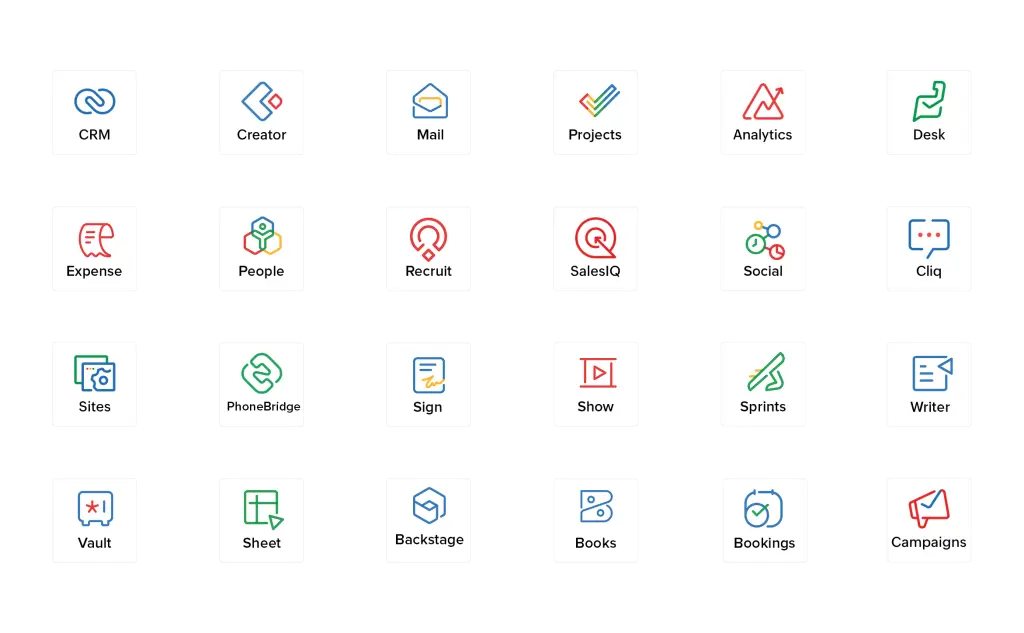
Some of the 55+ Zoho Applications include:
- Zoho Books (Accounting)
- Zoho CRM (Sales Management)
- Zoho Inventory (Inventory Management)
- Zoho Mail (Email commucation)
- Zoho Project (Project Management)
- Zoho Social (Social Media Management)
- Zoho One (All Zoho Applications in one App)
Tanzanian businesses are increasingly adopting Zoho because:
- It is affordable compared to traditional ERP systems
- It is scalable for growing SMEs
- It supports automation of manual processes
- It reduces dependency on spreadsheets
- It can integrate across departments
However, buying Zoho licenses alone does not guarantee success. Implementation is where most businesses either win or struggle.
What Does Zoho Implementation Actually Mean?
Zoho implementation is not just “creating an account.” It includes:
- Business process analysis
- System configuration
- Customization
- Data migration
- Workflow automation setup
- User training
- Ongoing support
Before diving into implementation, many businesses first need to answer a more fundamental question: should you implement Zoho One, or start with standalone apps? See our Zoho One vs Standalone Apps comparison to decide which path fits your business before you scope the rollout.
Many businesses in Tanzania fail during implementation because they:
- Skip planning
- Don’t define workflows
- Don’t clean their data
- Try to do everything themselves without guidance
A structured implementation ensures the system works around your business and not the other way around.
Common Implementation Mistakes in Tanzania
1. No Process Mapping
Businesses install Zoho before documenting how their operations work.
2. Poor Data Migration
Importing messy Excel data creates long-term reporting problems.
3. No User Training
Employees resist systems they don’t understand.
4. No Local Support
Time zone differences and lack of contextual knowledge create frustration. This is why working with a local Zoho consultant in Tanzania can make a major difference.
How Zoho Implementation Works (Step-by-Step)
Here’s a professional zoho implementation structure:
Step 1: Business Needs Assessment
- Identify departments involved
- Define pain points
- Set measurable goals
Step 2: System Design
- Configure modules
- Define user roles and permissions
- Map workflows
Step 3: Customization
- Invoice, Quotation, layout design
- Chart of accounts
- Custom fields
- Automation rules
- Approval workflows
- Integrations (e.g., Other Zoho Applications, WhatsApp, BulkSMS, Payment systems)
Step 4: Data Migration
- Migrate data from other solutions like Tally/Quickbooks/Excell/SalesForce
- Import customers, vendors, products
- Verify reports accuracy
Step 5: Testing & Training
- Internal testing
- Team onboarding
- Process documentation
Step 6: Go Live & Support
- System launch
- Performance monitoring
- Continuous optimization
How Much Does Zoho Implementation Cost
Costs vary depending on:
- Number of users
- Number of modules
- Level of customization
- Integration requirements
- Data migration complexity
Generally, costs include:
- Zoho license fees (paid directly to Zoho)
- Implementation, Customization & setup fees
- Training & support
Businesses should focus on ROI rather than upfront cost. Automation reduces errors, saves time, and improves visibility, which directly impacts profitability.
Which Industries in Tanzania Benefit Most from Zoho?
Zoho is especially effective for:
- Retail & wholesale distributors
- Hospitality (hotels & restaurants)
- Construction companies
- Logistics businesses
- Professional service firms
- Growing SMEs scaling operations
If your business handles:
- Sales tracking
- Inventory management
- Accounting
- Customer follow-ups
- Staff management
Then automation is no longer optional. Switch to Zoho
Why Local Zoho Support Matters in Tanzania
Working with a local implementation partner means:
- Understanding TRA compliance requirements
- Understanding Tanzanian business culture
- On-site training (if required)
- Faster response time
- Better customization for local workflows
Many businesses purchase Zoho but struggle to adapt it properly. That’s where structured implementation adds value.
Is Zoho Better Than Traditional ERP Systems?
Compared to traditional ERP systems:
| Traditional ERP | Zoho |
|---|---|
| High upfront cost | Affordable subscription |
| Complex deployment | Cloud-based setup |
| Heavy infrastructure | No server required |
| Long implementation time | Faster rollout |
For SMEs in Tanzania, Zoho often provides a more flexible and scalable solution.
Frequently Asked Questions (FAQ)
Can Zoho be customized for my business?
Yes. Zoho allows custom fields, workflows, automation rules, and even fully custom applications using Zoho Creator.
Is Zoho suitable for small businesses in Tanzania?
Absolutely. Zoho is designed to scale from startups to large enterprises.
How long does Zoho implementation take?
Depending on complexity, implementation can take between 2–8 weeks.
Can Zoho integrate with my POS system?
Yes, through APIs or custom integrations depending on your POS system.
Can Zoho integrate with my TRA EFD machine?
Yes, Zoho books can enable you to issue compliant tax invoices through third party integration with TRA VFD.
Do I need ongoing support?
Yes. Continuous optimization ensures your system evolves with your business.
Can Zoh integrate with local Bulksms provider in Tanzania
Yes. Zoho can integrate with local sms providers to provide you with automation capabilities like sending payment reminders for invoices in Zoho Books, Sending marketing campaings in Zoho CRM, and many more applications. Read more on Zoho Integration with BulkSMS
Zoho is not just software — it is a business transformation tool. But software alone does not solve operational inefficiencies. Strategy, customization, and proper implementation are what create results. If your business in Tanzania is ready to move from manual systems to automated workflows, structured implementation is the first step.
Ready to Implement Zoho the Right Way?
If you’re considering Zoho for your business in Tanzania, the first step is a structured consultation.
We’ll assess your processes, identify automation opportunities, and outline a clear implementation roadmap tailored to your operations.